
Articles
Every articles on Job Hunt Beacon.
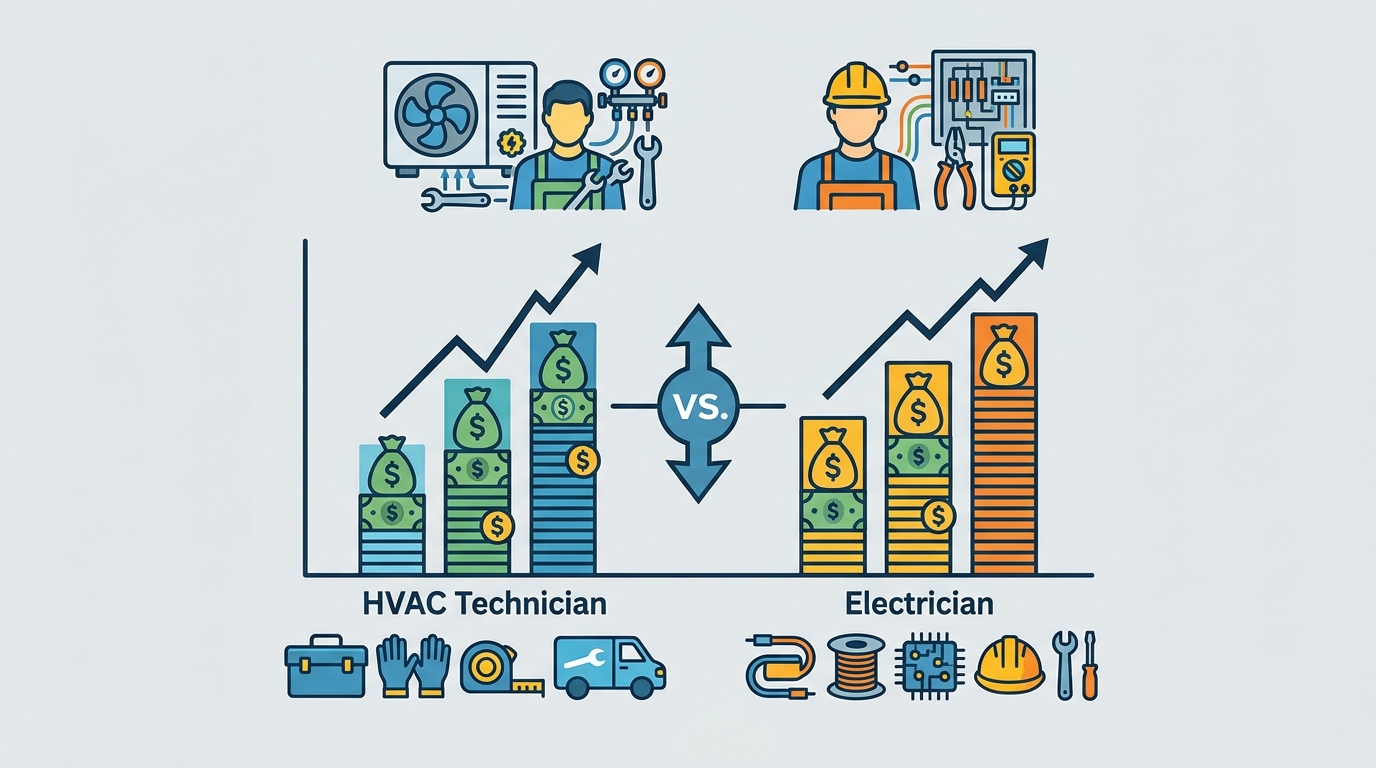
HVAC Technician vs. Electrician Salary: Which Pays More?
Electricians earn more at the national midpoint: a median annual wage of $63,190 in May 2025, against $61,010 for heating, air conditioning, and refrigeration mechanics and installers (U.S. Bureau of Labor Statistics, 2025). The two medians sit close together, and the spread inside each trade is much wider than the space between them.
Wyatt Holloway · 8 min read
What It's Really Like to Work as a Welder
Welding is skilled manual work: you read a drawing, set up a joint, control heat and filler metal, and prove the result holds. Welders, cutters, solderers and brazers held about 437,700 jobs in 2025, with 63 percent in manufacturing, 8 percent with specialty trade contractors, 5 percent with merchant wholesalers of durable goods and 4 percent self-employed (U.S. Bureau of Labor Statistics, 2025).
Desmond Okafor · 9 min read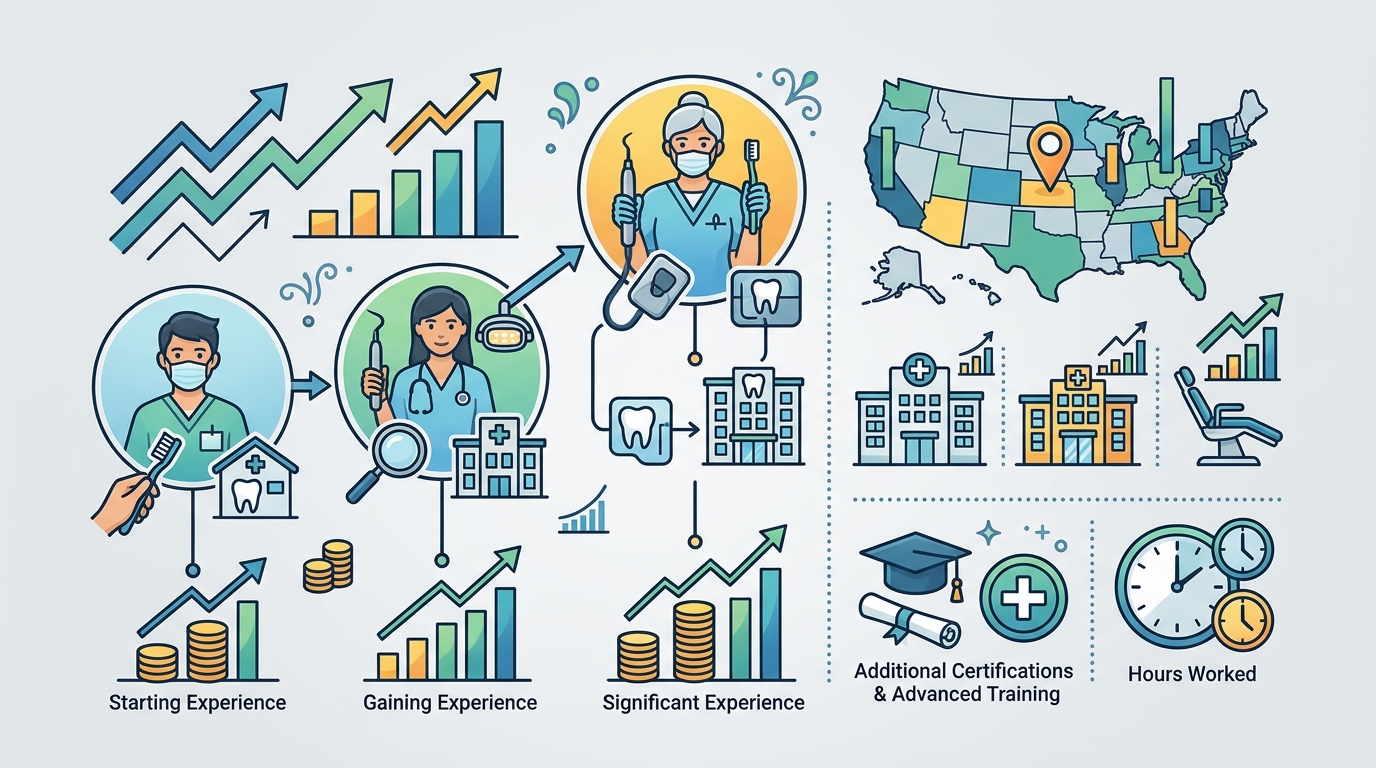
Dental Hygienist Salary: What to Expect by Experience and Location
The median annual wage for dental hygienists was $98,100, or $47.16 per hour (U.S. Bureau of Labor Statistics, 2025). Earlier federal wage estimates show a wide spread around that middle point: from $65,110 at the 10th percentile to $118,400 at the 90th (U.S. Bureau of Labor Statistics, Occupational Employment and Wage Statistics, 2023).
Wyatt Holloway · 10 min read
How to Ask for a Raise: A Guide for Nurses
Asking for a raise as a nurse works best as a documented case rather than a conversation about effort. Pull the published wage percentiles for registered nurses, get your employer's pay grid or union contract in writing, list what you did with numbers attached, and name a figure out loud.
Priya Chandrasekaran · 9 min read
Switching Careers to Insurance Sales: What You Need to Know
Insurance sales is one of the more open mid-career switches available: the U.S. Bureau of Labor Statistics (2025) reports that typical entry-level education is a high school diploma or equivalent, with no related work experience required and moderate-term on-the-job training. What you do need is a state license, and getting one — pre-licensing coursework plus the state exam — can take two to eight weeks depending on your pace (Insurance Business magazine, 2024).
Priya Chandrasekaran · 10 min read
How to Become a Web Developer: Step-by-Step Guide
Becoming a web developer means learning to build and maintain websites and web applications well enough to prove it — usually through HTML, CSS, JavaScript and a public portfolio — and then getting supervised experience in a junior or apprentice role. There is no license to sit, so the barrier is evidence of ability rather than a single exam.
Priya Chandrasekaran · 9 min read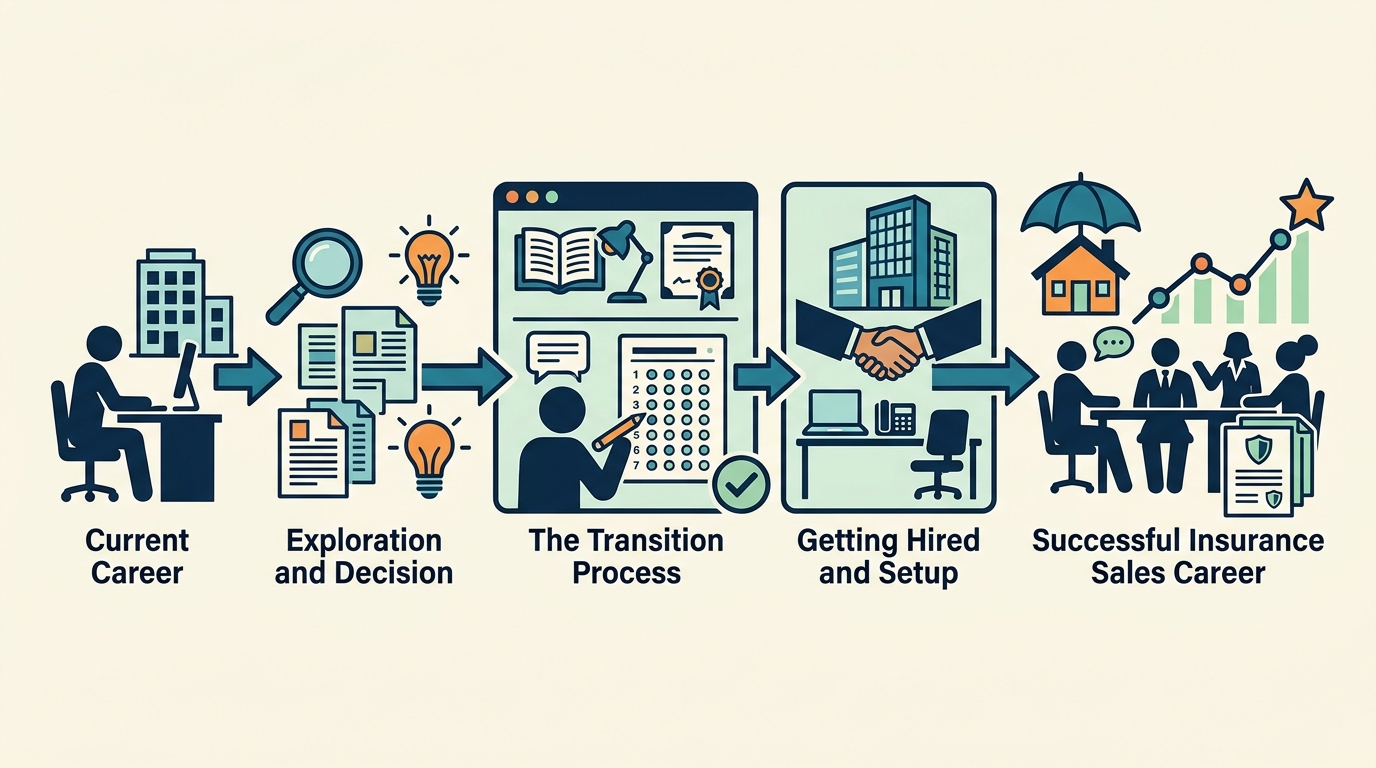
How to Switch to a Career in Insurance Sales, Step by Step
Switching into insurance sales is one of the shorter licensed-career transitions available to someone already working: the U.S. Bureau of Labor Statistics (2025) says agents must hold a license in the states where they work, and most people go from a standing start to licensed and working in 4 to 8 weeks once they choose a line of authority, finish any pre-licensing education, and pass the state exam (Xcel Solutions). The longer part is income. Pay is commonly commission-only for independent agents, or salary, salary plus commission, or salary plus bonus for agents employed by an agency or carrier (U.S. Bureau of Labor Statistics, May 2025) — so the realistic plan runs 6 to 12 months from research to a stable first year, not 8 weeks.
Marisol Tanaka-Reyes · 10 min read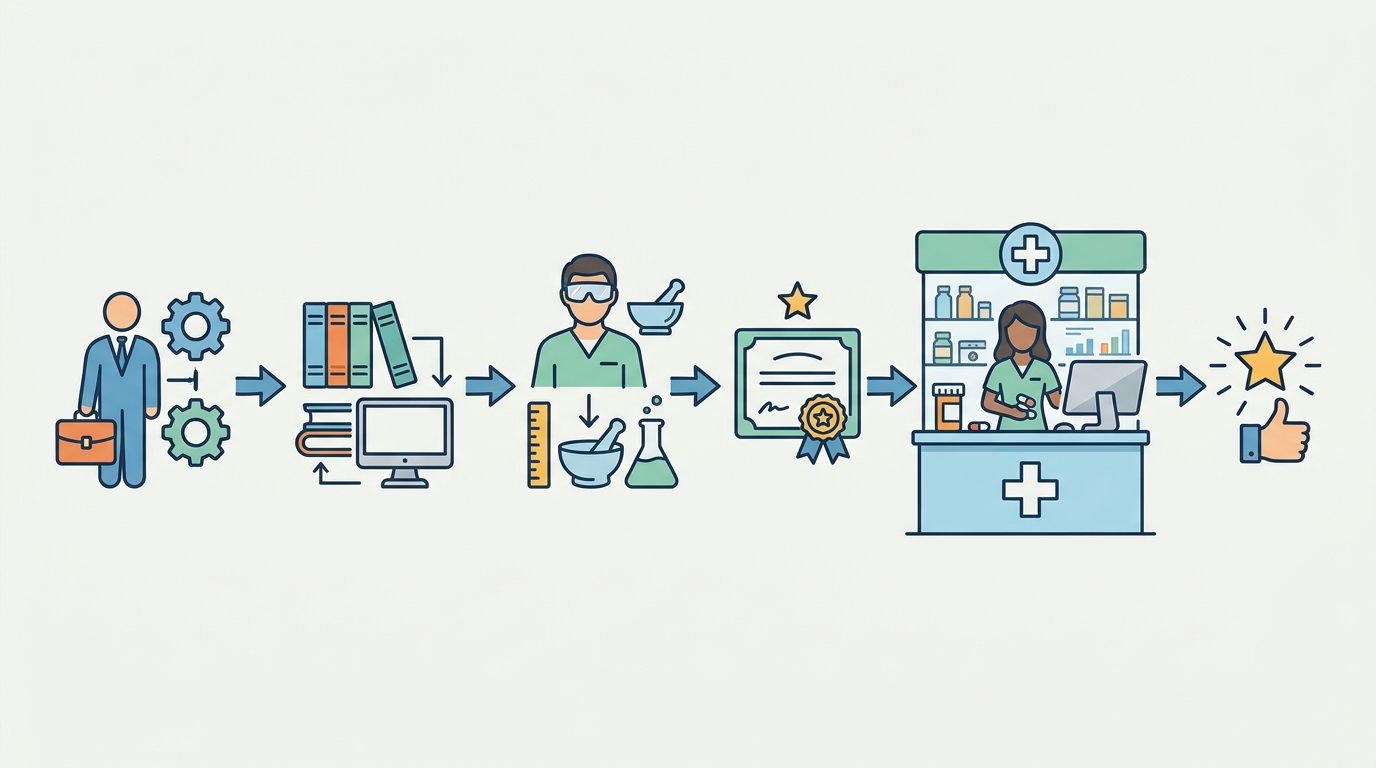
How to Switch to a Career in Pharmacy Technology, Step by Step
Switching into pharmacy technology usually takes somewhere between 6 and 18 months from first research to a steady first job, depending on whether you train on the job or complete a postsecondary program. The U.S. Bureau of Labor Statistics (2026-08-27) says pharmacy technicians typically need a high school diploma or equivalent and learn through on-the-job training lasting less than a year, or complete a pharmacy technology education program, which often awards a certificate in a year or less (BLS, 2026-08-27).
Wyatt Holloway · 11 min read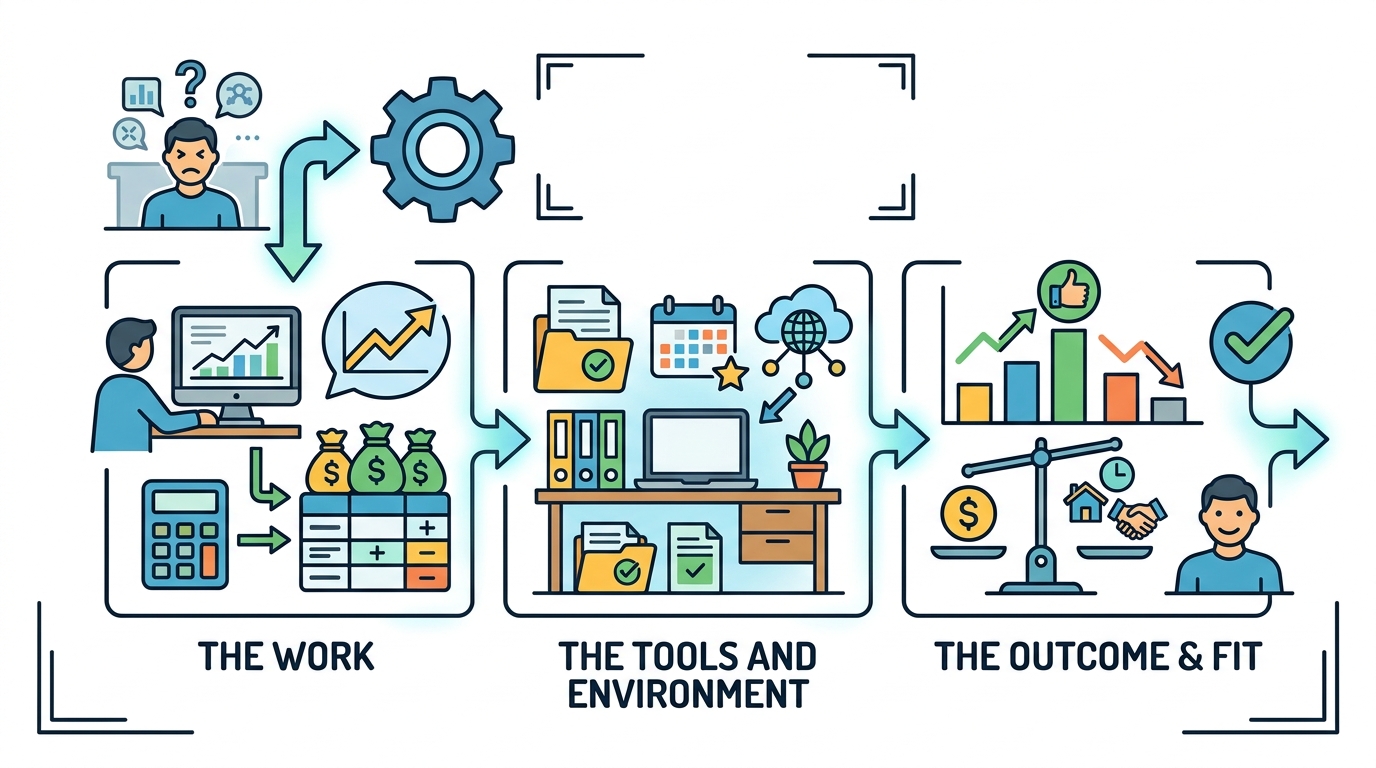
Is Becoming a Bookkeeper a Good Career Change?
Bookkeeping is one of the more realistic mid-career switches available, because the typical entry requirement is a high school diploma with moderate-term on-the-job training rather than a new degree, and no prior experience in a related occupation is normally expected (U.S. Bureau of Labor Statistics, 2025). The catch is the outlook: BLS projects employment for bookkeeping, accounting and auditing clerks to decline between 2025 and 2035 as routine tasks are automated, with most openings coming from workers leaving the occupation rather than new positions (U.S. Bureau of Labor Statistics, 2025).
Desmond Okafor · 10 min read
Cosmetology License: Requirements and How to Get Certified
A cosmetology license is the legal permission to cut, color, style and chemically treat hair for pay. Every state requires barbers, hairstylists and cosmetologists to be licensed, and to complete a program at a state-licensed barber or cosmetology school first (U.S. Bureau of Labor Statistics, 2018 and undated).
Priya Chandrasekaran · 8 min read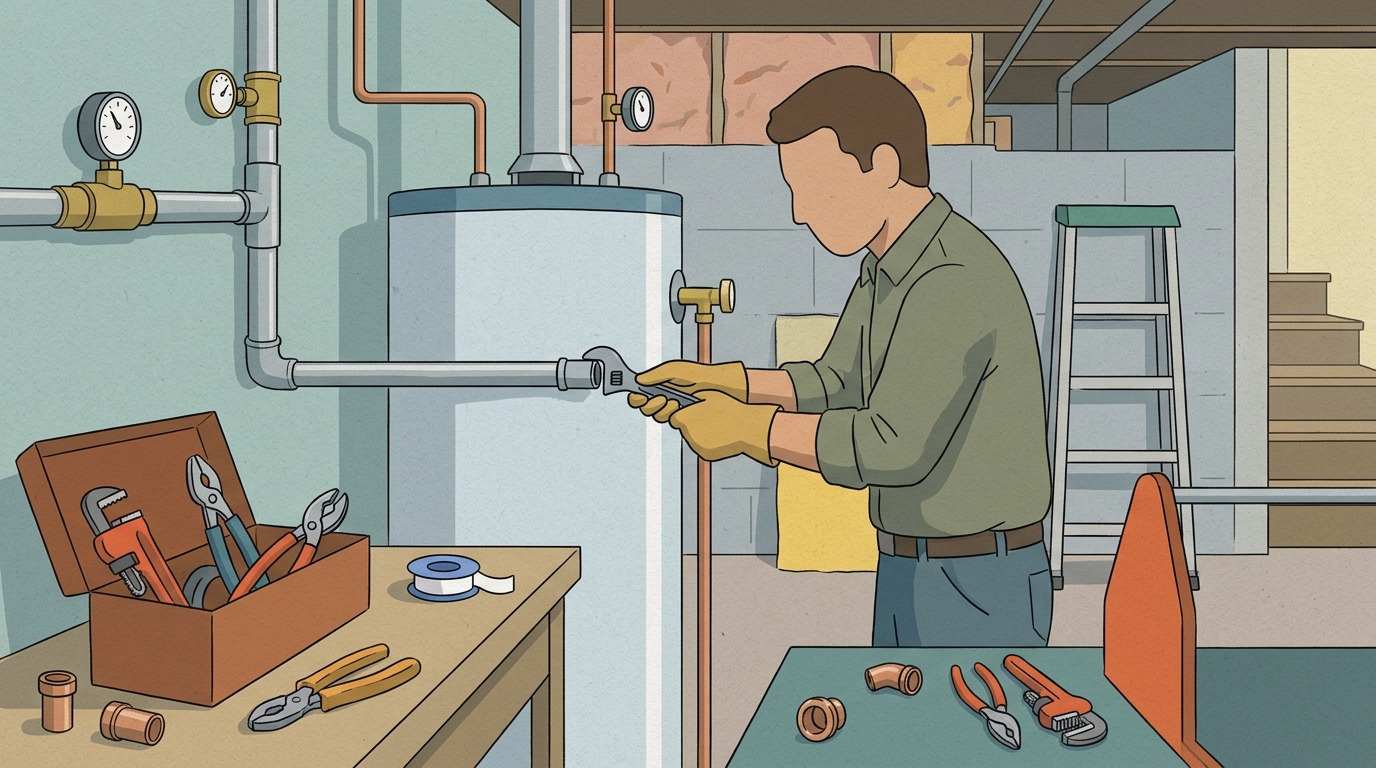
How to Become a Plumber
Plumbing is an apprenticeship trade. You enter with a high school diploma or equivalent, no prior related work experience, and learn the job through paid on-the-job training combined with classroom instruction (U.S. Bureau of Labor Statistics, 2025). After the apprenticeship you sit a journey-level licensing exam, and most employers expect you to hold that license (U.S. Bureau of Labor Statistics, 2025).
Desmond Okafor · 10 min read
How to Get Your CNA License
To work as a CNA you complete a state-approved nursing assistant education program and pass your state's competency exam, after which your name goes on the state nurse aide registry (U.S. Bureau of Labor Statistics, 2026). You must be on that registry to work in a nursing home (U.S. Bureau of Labor Statistics, 2026).
Wyatt Holloway · 8 min read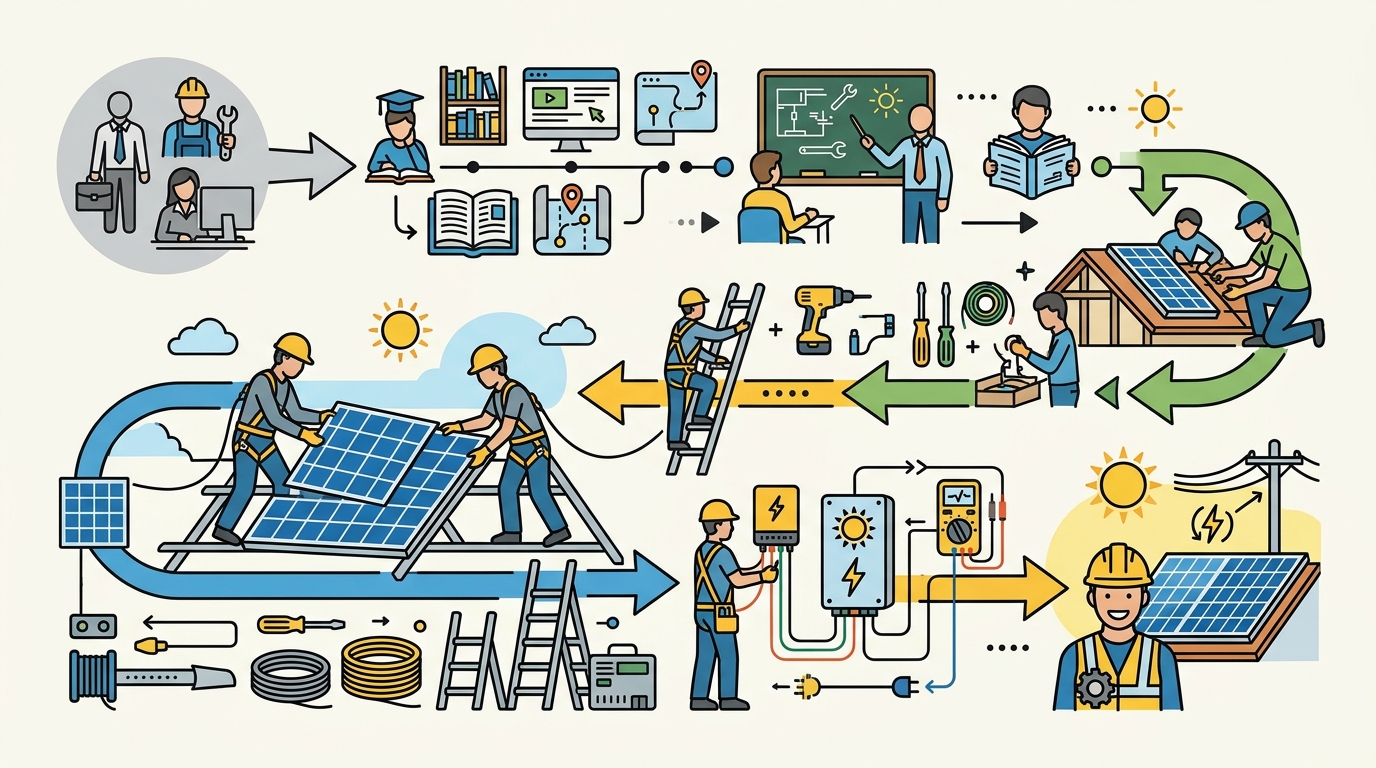
Solar Installer Career Change Roadmap for Working Adults
Moving into solar PV installation from another job usually takes somewhere between 6 and 18 months from first research to a steady crew role — a certificate program of 12 weeks to less than 1 year (CareerOneStop) followed by the 1 to 12 months of on-the-job training most entrants go through (CareerOneStop). The alternative is a registered apprenticeship: the Solar Energy Technician Apprenticeship at St. Petersburg College with UCF's Florida Solar Energy Center runs two years at no cost and includes full-time employment with a solar installation company.
Priya Chandrasekaran · 12 min read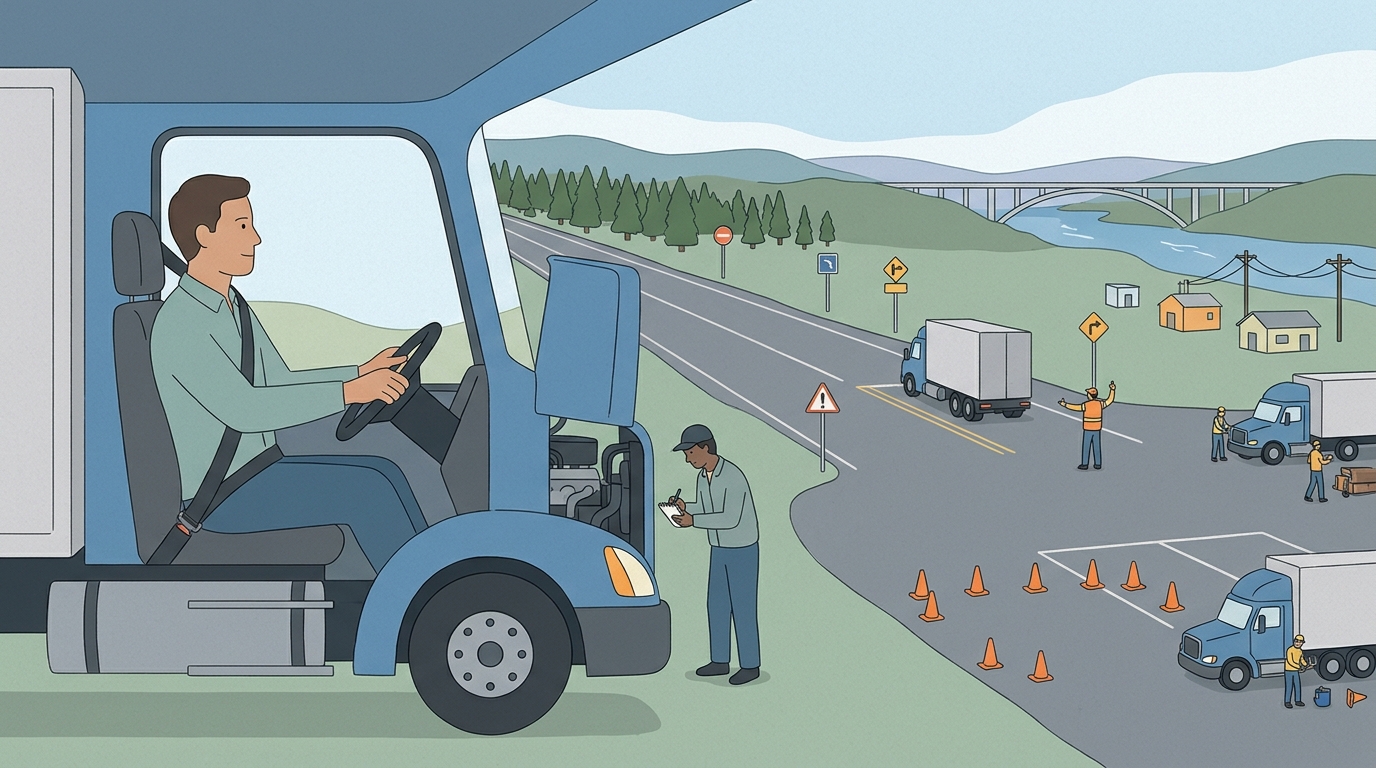
How to Get Your CDL
A commercial driver's license is issued by your state licensing agency, not by the federal government — FMCSA sets the rules, but state governments issue CDLs (FMCSA, 2025-12-08). The path runs in a fixed order: qualify medically, pass the knowledge test to get a commercial learner's permit, complete entry-level driver training with a provider on FMCSA's Training Provider Registry, hold the permit at least 14 days, then pass a three-part skills test (FMCSA, 2025-12-08).
Noor Abdallah · 8 min read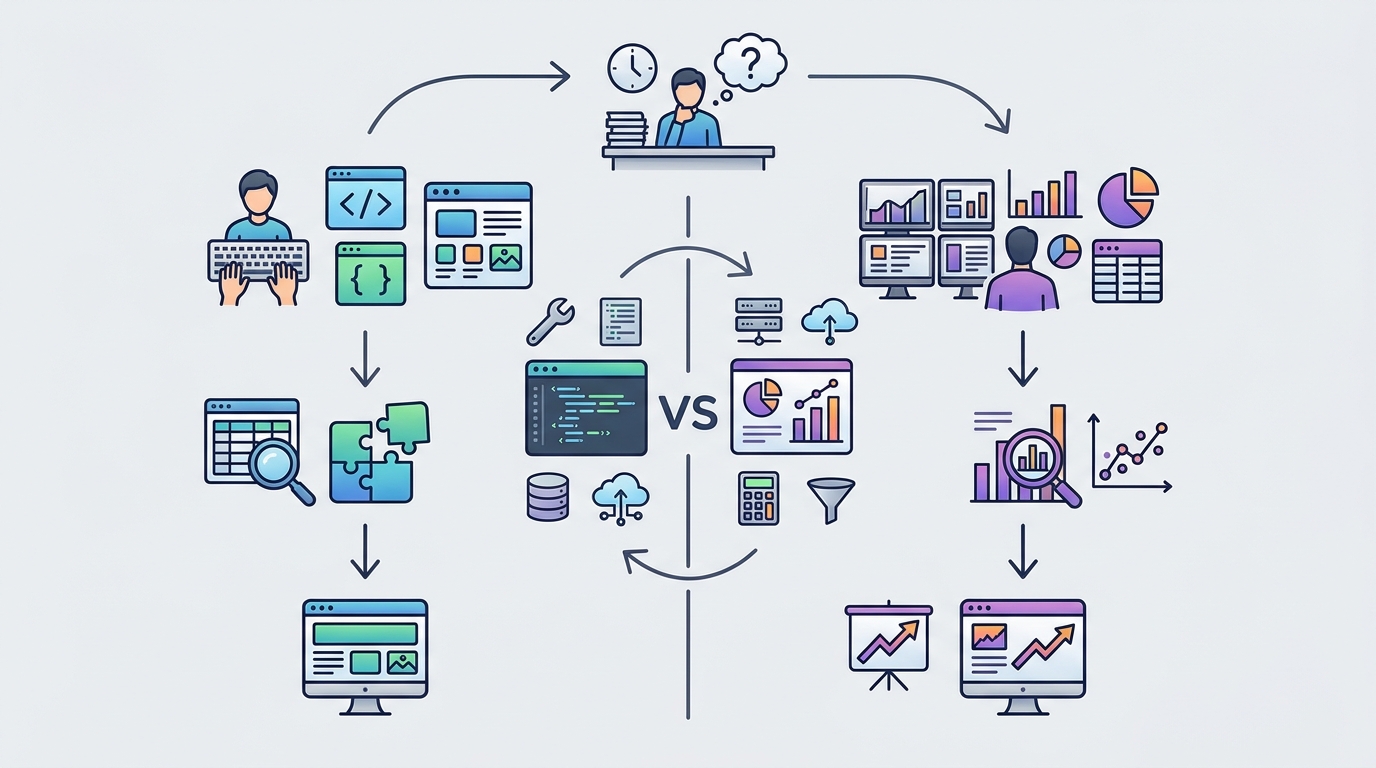
Web Developer vs. Data Analyst: Which Career Change Is Right for You
Web development and data analysis both let you leave physical or shift-based work for a desk, but they ask different things at the door. Web developers and digital designers may not need specific education credentials if they can demonstrate their abilities through prior work or projects (U.S. Bureau of Labor Statistics, 2025), while the closest occupation the government tracks for analytics work — data scientist — typically needs at least a bachelor's degree in mathematics, statistics, computer science or a related field, with some employers requiring or preferring a master's or doctorate (U.S. Bureau of Labor Statistics, 2025).
Desmond Okafor · 8 min read
How to Become a Welder Without a Degree
You do not need a college degree to work as a welder. The U.S. Bureau of Labor Statistics (undated) reports that welders, cutters, solderers and brazers typically need a high school diploma or equivalent plus technical and on-the-job training, and ONET classifies the occupation as Job Zone 2: Some Preparation Needed (ONET 31.0 Database, undated).
Priya Chandrasekaran · 8 min read
Social Media Manager vs. Marketing Manager: Which Career Path Is Right for You?
Social media manager and marketing manager are not two names for the same job. A social media manager owns channels, content and community in a brand's voice day to day; a marketing manager owns strategy, budget and usually people, with social as one line item among many. The federal data that governs pay and outlook reflects that split: social media roles are counted mainly under Market Research Analysts and Marketing Specialists (SOC 13-1161.00), while marketing manager is its own management occupation (SOC 11-2021.00) (ONET OnLine, sourced to the U.S. Bureau of Labor Statistics, 2025).
Noor Abdallah · 9 min read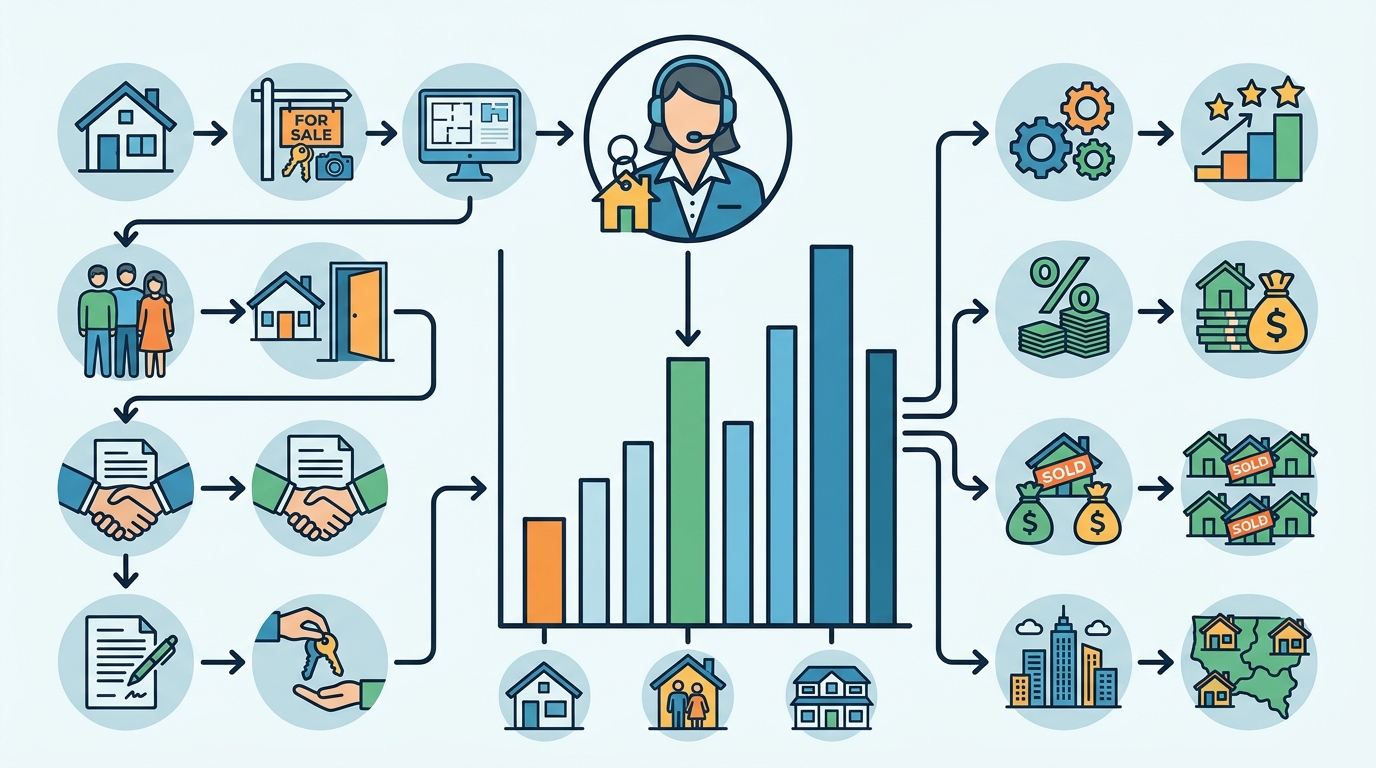
Real Estate Agent Pay: Average Earnings, Range, and What Affects It
Real estate sales agents earned a median annual wage of $52,830 (U.S. Bureau of Labor Statistics, 2025), while the 90th percentile reached $119,590 a year (U.S. Bureau of Labor Statistics, May 2023). Most of what an agent takes home is commission, paid as a share of each sale and split with the brokerage, so income arrives in uneven lumps rather than as a steady paycheck.
Priya Chandrasekaran · 10 min read
Your Plan for Changing Careers to Bookkeeping
Moving into bookkeeping from another line of work usually takes 12 to 24 months from first research to a stable role, and you can do most of it while still employed. ONET OnLine (U.S. Department of Labor) places the occupation in Job Zone Three, where people usually need one or two years of training combining on-the-job experience with informal training from experienced workers — and the U.S. Bureau of Labor Statistics (2025) lists typical entry-level education as 'some college, no degree' with no prior related work experience required.
Desmond Okafor · 10 min read
How to Become a Surgical Technologist
Becoming a surgical technologist usually means completing a certificate or an associate's degree from an accredited surgical technology program, then sitting a certification exam. The U.S. Bureau of Labor Statistics (2025) lists a postsecondary nondegree award as the typical entry-level education, with no prior work experience in a related occupation required, and ONET OnLine (U.S. Department of Labor, 2025) places the job in Job Zone Three, where preparation usually takes one or two years.
Wyatt Holloway · 10 min read
How to Negotiate a Higher Salary as a Software Developer
Negotiating a higher salary as a software developer comes down to three things you prepare in advance: a defensible market number, a short list of your own work expressed in numbers, and a sentence you can say out loud without flinching. The national benchmark to start from is the median annual wage for software developers, $135,980 in 2025, in an occupation holding about 1.7 million jobs with projected growth of 10 percent through 2035 (U.S. Bureau of Labor Statistics, 2025).
Desmond Okafor · 8 min read
Your Plan for Changing Careers to Instructional Design
Moving into instructional design from another job usually takes 12 to 24 months if you start while still employed, build a portfolio on the side, and treat the credential as the last step rather than the first. The U.S. Bureau of Labor Statistics (2025) lists "Instructional Designer" work under instructional coordinators, where entry typically expects a master's degree and five years or more of related work experience, while the closely related training and development specialist role typically needs a bachelor's degree.
Noor Abdallah · 10 min read
So You Want to Become a Solar Installer After 30
Becoming a solar photovoltaic installer after 30 is one of the more accessible trade switches, because the job is mostly learned on a crew rather than in a degree program. The U.S. Bureau of Labor Statistics (2025) lists a modest typical entry-level education level and on-the-job training alongside experienced installers as the usual route in, and notes that people coming from electrician, roofer, carpenter or laborer work already perform basic construction duties, which may shorten training time.
Noor Abdallah · 9 min read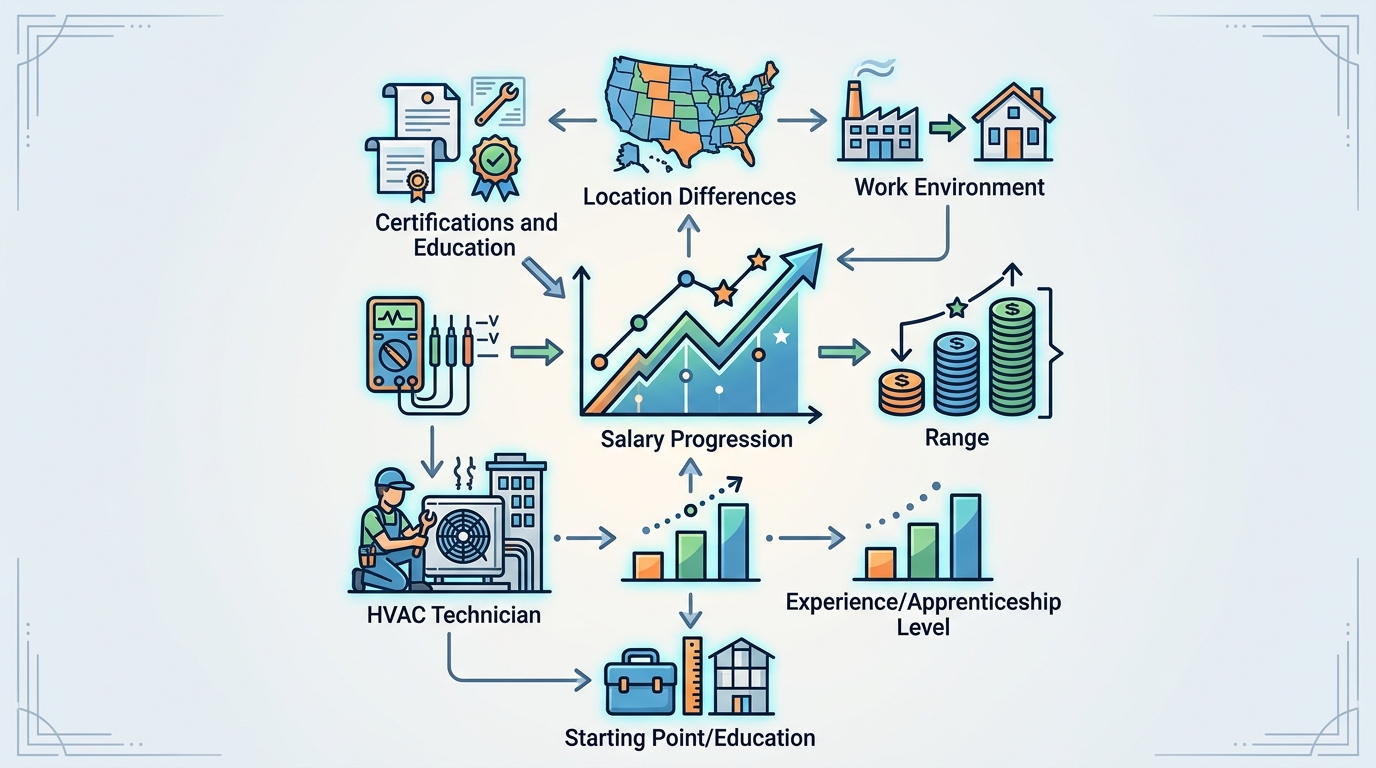
HVAC Technician Pay: Average Salary, Range, and What Affects It
The median annual wage for heating, air conditioning, and refrigeration mechanics and installers was $61,010 (U.S. Bureau of Labor Statistics (BLS), 2025). That is the midpoint for the whole occupation nationally — half of technicians earned more, half earned less — and it covers everyone from first-year helpers to senior commercial service techs.
Noor Abdallah · 10 min read
How to Get Your Welding Certification
Welding certification is earned by welding, not by sitting a multiple-choice paper. The American Welding Society's Certified Welder program requires you to test in accordance with the QC47 Specification and complete a welder performance qualification test at an AWS Accredited Testing Facility, with no prerequisite courses or certifications required (American Welding Society, undated).
Marisol Tanaka-Reyes · 8 min read
How to Become a Pharmacy Technician
Pharmacy technicians usually need a high school diploma or equivalent and learn the work through on-the-job training, though many complete a postsecondary pharmacy technology program instead (U.S. Bureau of Labor Statistics). Most states regulate the role in some way, and requirements in regulating states typically include some or all of a diploma or GED, a formal training program, an exam, fees, continuing education, and a criminal background check (U.S. Bureau of Labor Statistics).
Marisol Tanaka-Reyes · 9 min read
Graphic Designer or UX Designer: A Second-Career Comparison
If you are moving into design later in your working life, the two paths differ most on money and on how you get in. Web and digital interface designers — the group federal data uses for UX work — had a median annual wage of $104,000 in 2025, while graphic designers' median was $62,960 (U.S. Bureau of Labor Statistics, 2025). Graphic design typically expects a bachelor's degree in design or a related fine arts field, while education requirements for web and digital designers vary by work setting (U.S. Bureau of Labor Statistics, 2025).
Noor Abdallah · 9 min read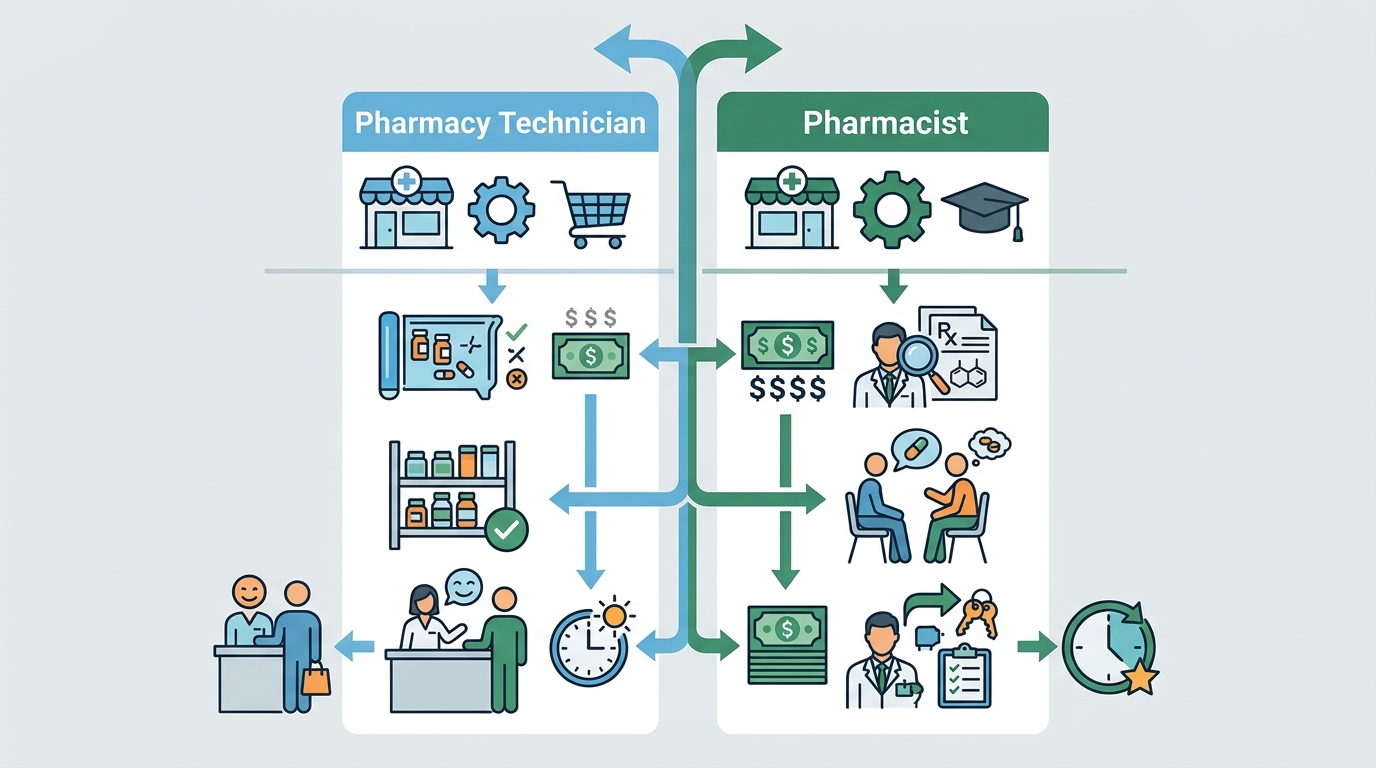
Pharmacy Technician vs. Pharmacist: Pay, Duties, and Day-to-Day Differences
Pharmacy technicians and pharmacists work side by side, but the two roles differ in schooling, legal responsibility and pay structure. Technicians typically need a high school diploma or equivalent (U.S. Bureau of Labor Statistics, undated) and, in many states, certification; pharmacists need a Doctor of Pharmacy degree, which usually takes four years after prerequisite coursework (U.S. Bureau of Labor Statistics, 2025), plus state licensure.
Marisol Tanaka-Reyes · 9 min read
Is Becoming an Instructional Designer a Good Career Change?
Instructional design is a realistic mid-career move if you already build training, teach, or explain complex things for a living — the work rewards experience rather than penalising it. Most people switching from a related job need 12 to 24 months to build a portfolio and land paid work; school-based instructional coordinator roles add the time for a master's degree, which the U.S. Bureau of Labor Statistics (2025) lists as the typical entry requirement.
Marisol Tanaka-Reyes · 10 min read
Medical Coder vs. Medical Assistant Salary: Which Pays More?
On national figures, medical coders out-earn medical assistants, and the gap grows with experience. ONET OnLine's national wage percentiles put the median annual wage for medical records specialists — the occupation the U.S. Bureau of Labor Statistics defines to include medical coders — at $51,140, against $45,690 for medical assistants (ONET OnLine, undated).
Marisol Tanaka-Reyes · 8 min read
Resume Tips for Electrician Jobs (With Examples)
An electrician resume gets read fast, usually by a service manager, foreman or shop owner checking three things: what license you hold and in which state, what work you have actually done — residential service, commercial rough-in, industrial controls — and whether your hours and code knowledge check out. Everything else on the page supports those answers.
Wyatt Holloway · 7 min read
Paralegal Salary: What to Expect by Experience and Location
Paralegals and legal assistants had a median annual wage of $62,890 in May 2025 (U.S. Bureau of Labor Statistics, 2025). The year before, the median was $61,010 in May 2024 (U.S. Bureau of Labor Statistics, 2024).
Marisol Tanaka-Reyes · 10 min read
How to Become a Solar Panel Installer: Step-by-Step Guide
Solar photovoltaic installers mount, wire and commission solar panel systems on roofs, carports and ground mounts. Entry-level education is typically a high school diploma or equivalent, with no prior related work experience required, and most new installers learn through moderate-term on-the-job training that usually lasts between one month and one year (U.S. Bureau of Labor Statistics, 2025).
Wyatt Holloway · 10 min read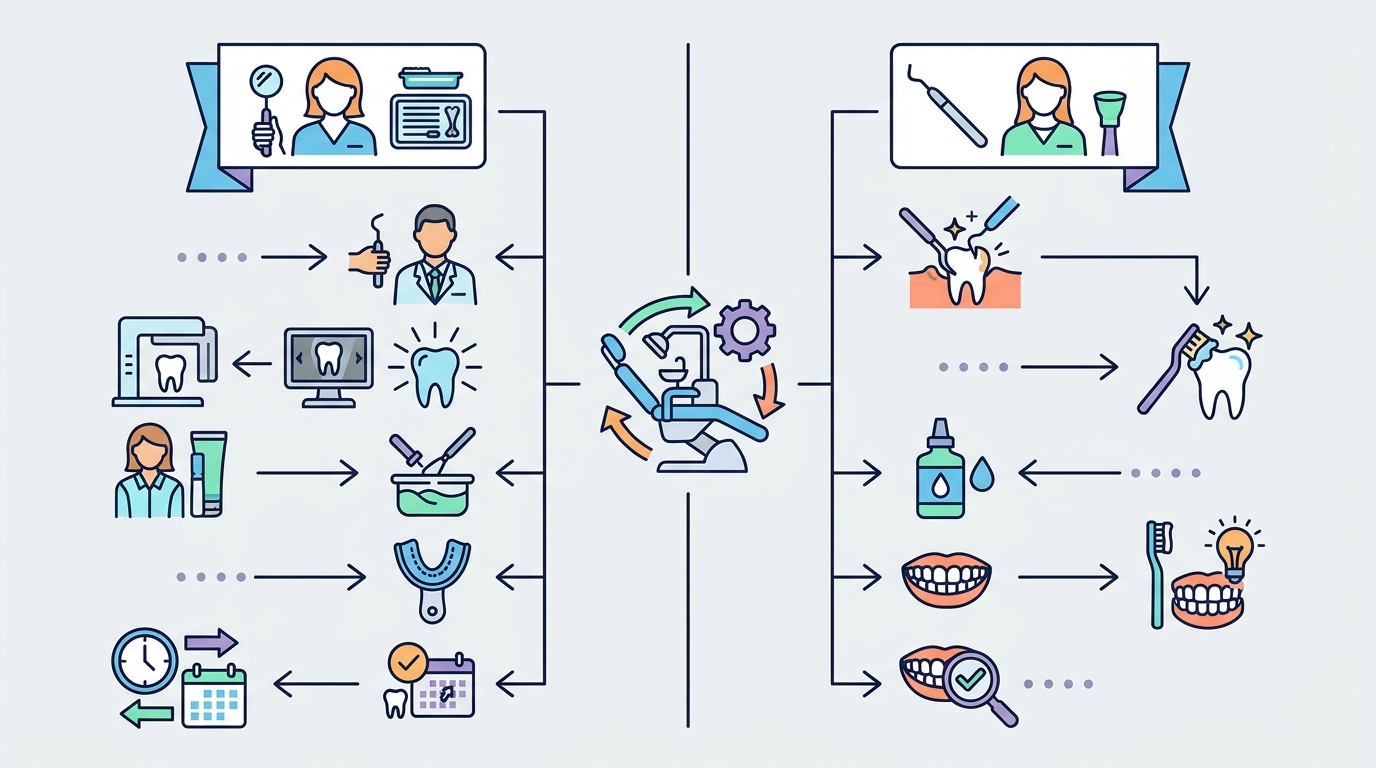
Dental Assistant vs. Dental Hygienist: Key Differences Explained
Dental assisting usually takes about a year of training and no license in most states, with a median annual wage of $48,070 (U.S. Bureau of Labor Statistics, 2025-05). Dental hygiene takes an associate's degree, a program of about three years, and a license in every state, with a median annual wage of $98,100 (U.S. Bureau of Labor Statistics, 2025-05).
Wyatt Holloway · 8 min read
How to Become a Pharmacy Technician Without Experience
You can enter this job without pharmacy experience. The U.S. Bureau of Labor Statistics (2025) lists a high school diploma or equivalent as the typical entry-level education for pharmacy technicians, lists no prior work experience in a related occupation as a requirement, and describes training as commonly provided on the job after hire.
Noor Abdallah · 8 min read
How to Get Your Insurance Agent License
Insurance sales agents must hold a license in the states where they work (U.S. Bureau of Labor Statistics, 2025), and in most states a license is issued only to applicants who complete specified courses and pass a state exam covering insurance fundamentals and state insurance laws (U.S. Bureau of Labor Statistics, 2025). Separate licenses are required to sell life and health insurance and to sell property and casualty insurance (U.S. Bureau of Labor Statistics, 2025), so your first decision is which lines you want to work in.
Desmond Okafor · 8 min read
Cybersecurity Analyst Pay: Average Salary, Range, and What Affects It
Cybersecurity analysts are counted by the federal government as information security analysts, and the median annual wage for that occupation was $129,180 — about $62.11 an hour — in May 2025 (U.S. Bureau of Labor Statistics, 2025). The spread around that midpoint is wide: in the May 2023 OEWS wage estimates, the 10th percentile earned $69,210 a year and the 90th percentile earned $182,370 (U.S. Bureau of Labor Statistics OEWS, 2023).
Desmond Okafor · 10 min read
Dental Assistant Job Description: Duties, Skills, and Salary
A dental assistant prepares patients and treatment rooms, works chairside while the dentist treats, sterilizes instruments, and keeps records and schedules moving. Almost all of the work happens in dentists' offices, which employed 91 percent of dental assistants, with smaller numbers in outpatient care centers, offices of physicians and government settings (U.S. Bureau of Labor Statistics, 2025).
Priya Chandrasekaran · 9 min read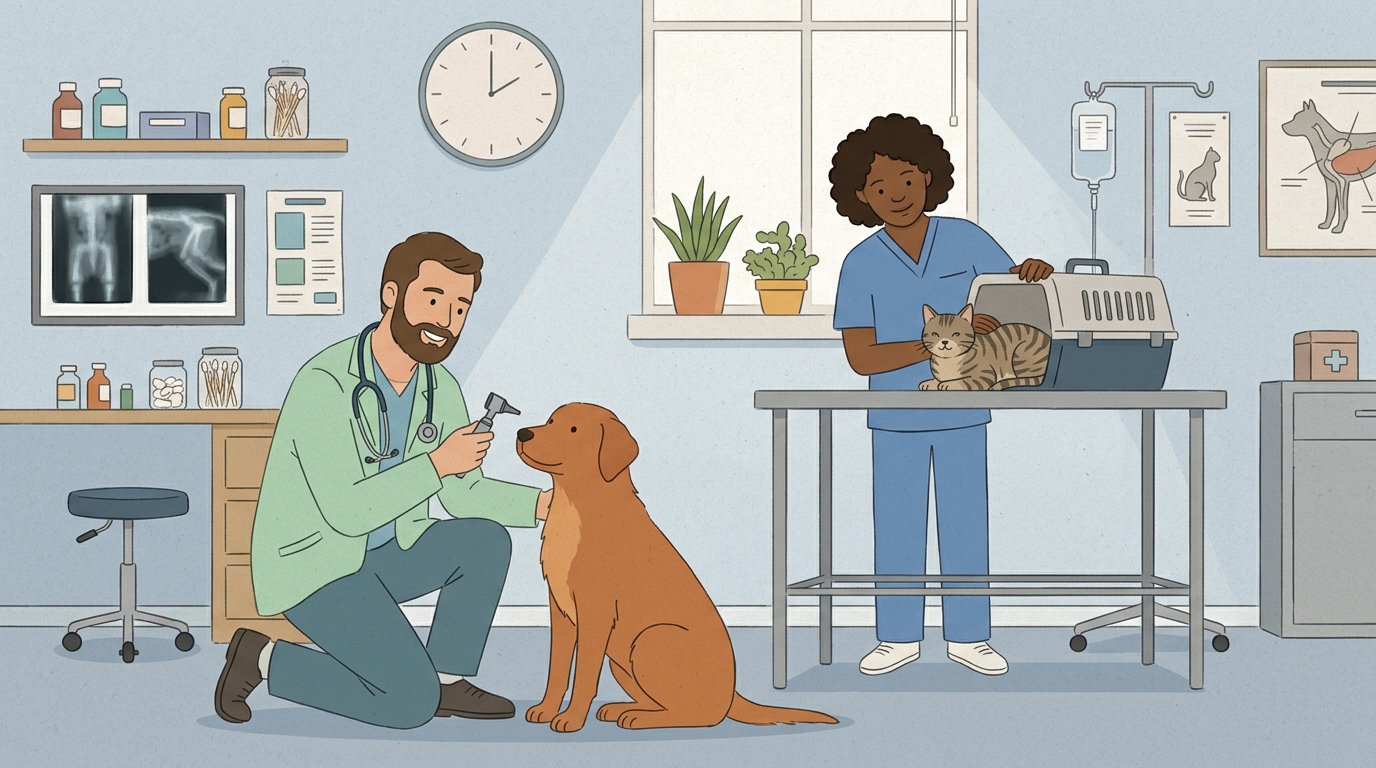
What Does a Veterinarian Do? Duties, Skills, and Salary Explained
A veterinarian diagnoses and treats animals: examining patients, performing surgery, running and reading tests, vaccinating against disease, prescribing medication, and euthanizing animals when treatment is no longer humane (U.S. Bureau of Labor Statistics, 2025). The job also means explaining all of that to the people who own the animal and who pay for the care.
Marisol Tanaka-Reyes · 9 min read
What Does a Pharmacy Technician Do? A Day in the Life
A pharmacy technician helps pharmacists dispense prescription medication to patients and health professionals (U.S. Bureau of Labor Statistics, 2025). Day to day that means collecting the information needed to fill a prescription, measuring and labeling medication, entering patient details into a computer system, processing insurance claims and flagging stock shortages to the pharmacist (U.S. Bureau of Labor Statistics, 2025).
Desmond Okafor · 8 min read
How to Prepare for a Medical Assistant Interview
Preparing for a medical assistant interview comes down to three things: documented proof of your training and certification status, short stories that show how you handle patients and paperwork, and the logistics of the day itself. Medical assistants held about 833,900 jobs in 2025, and the job outlook for 2025-35 is much faster than average (U.S. Bureau of Labor Statistics, 2025) — but a busy clinic still interviews carefully, because the person they hire takes histories and vital signs for every patient who walks in (U.S. Bureau of Labor Statistics, undated).
Marisol Tanaka-Reyes · 7 min read
How to Become a Paralegal
Most people enter this occupation with an associate's degree or a certificate in paralegal studies, the typical entry-level education the U.S. Bureau of Labor Statistics lists for paralegals and legal assistants (BLS, 2026-08-27). There is no mandatory certification examination for paralegals anywhere in the United States, according to the American Bar Association's position as described in secondary reporting, so credentials like NALA's Certified Paralegal are voluntary signals to employers rather than licences.
Wyatt Holloway · 9 min read
Pharmacy Technician vs. Medical Assistant: Which Career Fits You?
Pharmacy technicians work under a licensed pharmacist, preparing and labeling medications, managing drug inventory and processing insurance claims. Medical assistants work alongside physicians and other clinicians, interviewing patients, measuring vital signs, assisting with exams and keeping schedules and records moving.
Noor Abdallah · 7 min read
Pharmacy Technician: A Guide for Career Changers
Pharmacy technician is one of the few healthcare roles you can enter without a degree: typical entry-level education is a high school diploma or equivalent, with no prior related work experience required (U.S. Bureau of Labor Statistics, 2025). Most career changers get from first research to first paid shift in 3 to 12 months, depending on whether their state requires a formal training program before they can work.
Wyatt Holloway · 9 min read
Nursing Interview Questions: What to Expect and How to Prepare
Nursing interviews turn on two things: behavioral stories that show how you treat people under pressure, and clinical judgment questions that show how you spot and act on a change in a patient's condition. Most use a panel rather than a single manager, a scoring rubric, and a short list of predictable themes you can prepare in advance.
Noor Abdallah · 8 min read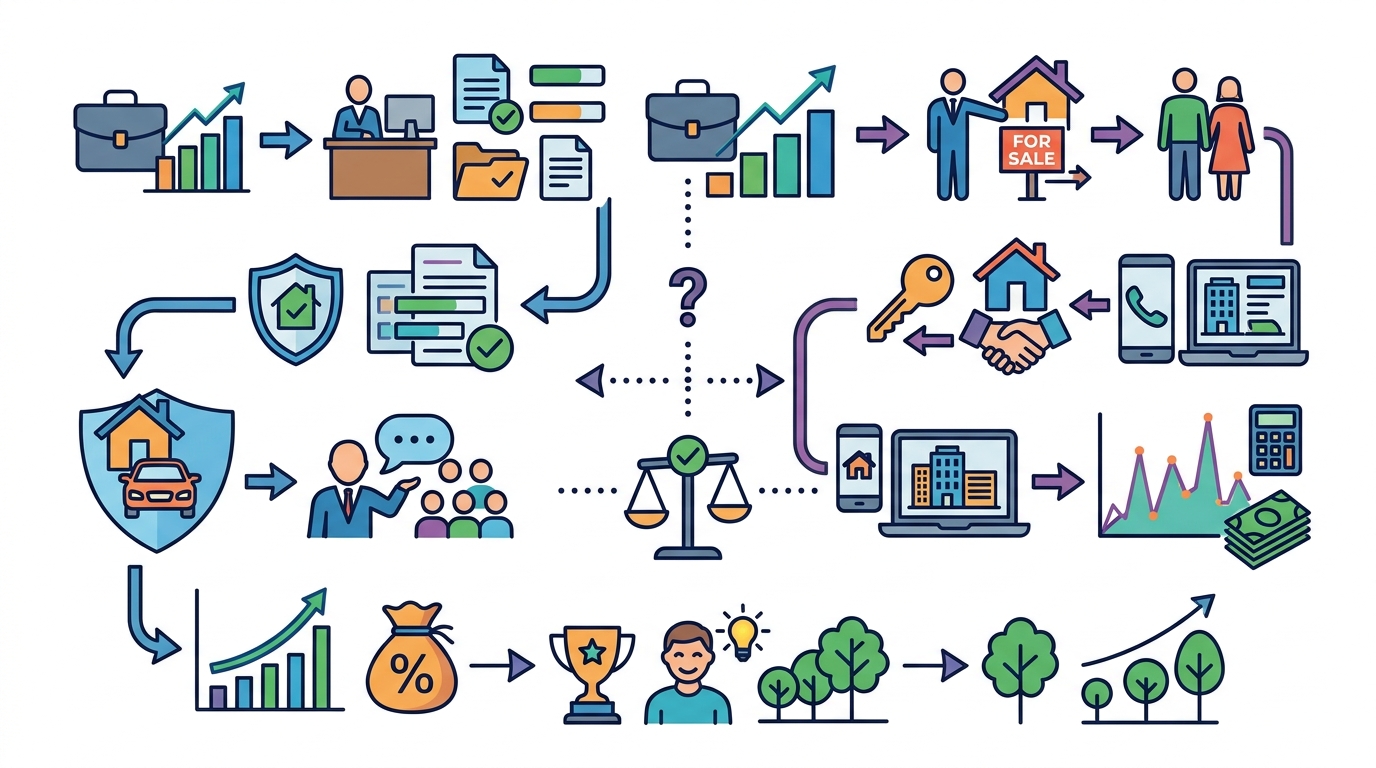
Choosing Between Insurance Agent and Real Estate Agent as a Career Changer
Insurance sales and residential real estate are the two most common licensed second careers for people who want out of a current job without years of school. Both typically need only a high school diploma plus a state license earned by coursework and exam (U.S. Bureau of Labor Statistics, 2025), and both pay largely through commission. The real split is lifestyle: insurance is mostly desk-and-phone with regular full-time hours, while real estate means evenings, weekends, and a lot of time in your car.
Priya Chandrasekaran · 8 min read
How to Become a Massage Therapist
Becoming a massage therapist means finishing a postsecondary massage therapy program, then meeting your state's rules — which in most states include passing an exam and holding a license (U.S. Bureau of Labor Statistics, 2025). Programs sit in private, independent schools and in community colleges or other public institutions, and take several months to a couple of years depending on the required hours (U.S. Bureau of Labor Statistics, 2025).
Priya Chandrasekaran · 9 min read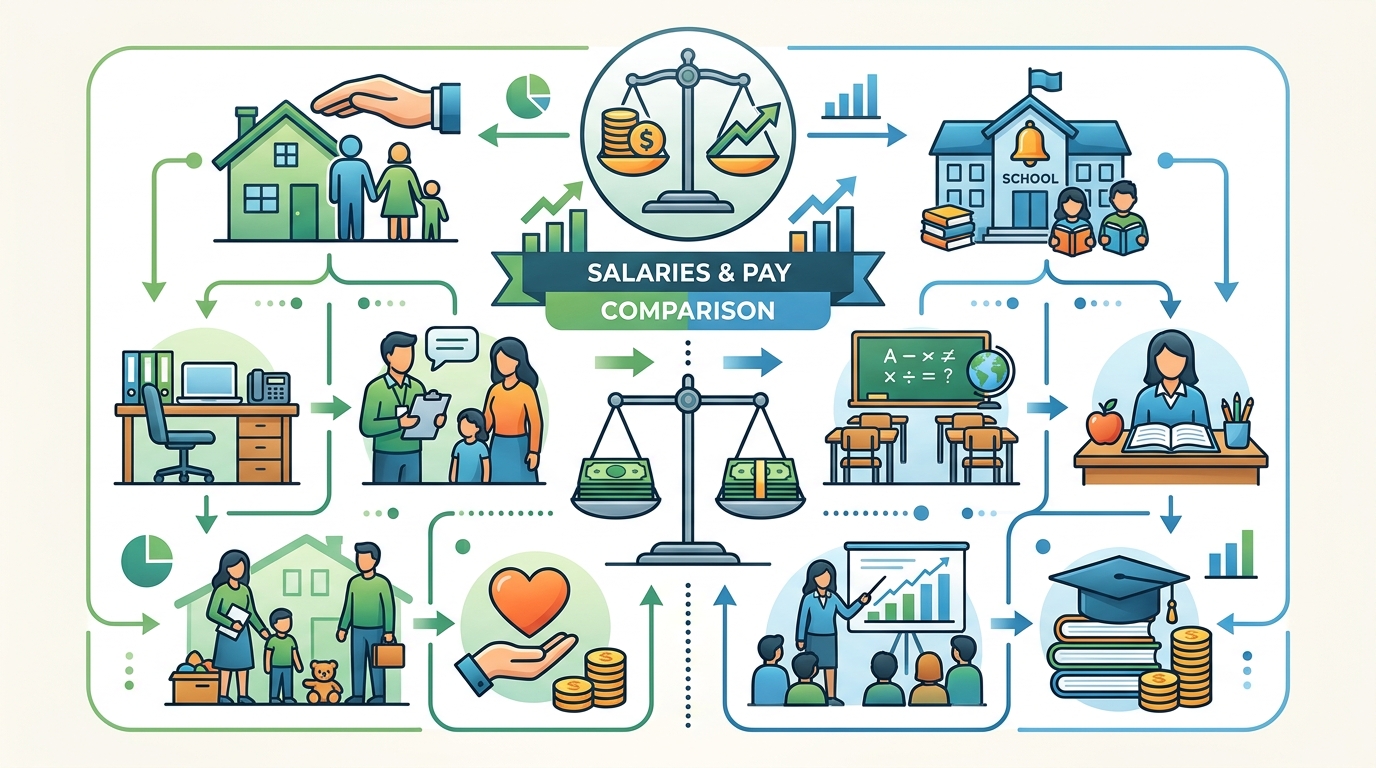
Social Worker vs. Teacher Salary: Which Pays More?
There is no single answer that holds for every social worker and every teacher. The U.S. Bureau of Labor Statistics publishes a median annual wage for social workers and a separate median annual wage for high school teachers in its 2025 Occupational Outlook Handbook, and the gap between them moves depending on which social work subcategory and which industry you compare (U.S. Bureau of Labor Statistics, 2025).
Noor Abdallah · 9 min read
How to Become a Dental Assistant Without a Degree
Whether you need formal schooling to assist chairside depends entirely on where you work. The U.S. Bureau of Labor Statistics (2025) notes that some states require dental assistants to graduate from an accredited program and pass an exam, while in other states there are no formal educational requirements and assistants learn through on-the-job training.
Marisol Tanaka-Reyes · 9 min read
How to Become a Bank Teller With No Experience
You do not need a college degree to become a bank teller. The U.S. Bureau of Labor Statistics lists the typical entry-level education for tellers as a high school diploma or equivalent, with training delivered on the job after you are hired (U.S. Bureau of Labor Statistics, 2025). What banks screen for instead is cash accuracy, steady customer service and a background check they can clear.
Desmond Okafor · 9 min read